How Many Tags Does Etsy Allow? The Exact Limits, and What to Do With Them
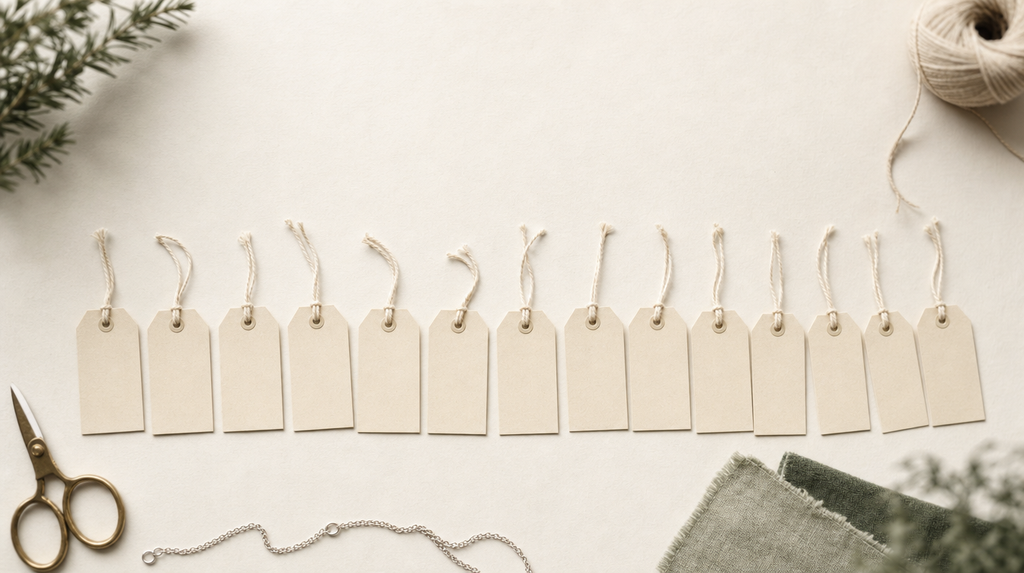
Etsy allows 13 tags per listing, and each tag can be up to 20 characters long. That is the whole rule. Everything else people argue about — plurals, commas, whether to repeat words — sits on top of those two numbers.
What makes the limit interesting is the arithmetic. Thirteen slots at twenty characters is 260 characters of search space per listing, given to you free, and most shops use under half of it. Not because they don’t care, but because filling thirteen slots well is genuinely tedious, and an empty slot doesn’t look like a problem. It looks like nothing.
Every listing limit in one place
| Field | Limit | Searchable |
|---|---|---|
| Tags | 13 tags, 20 characters each | Yes |
| Title | 140 characters | Yes, heavily |
| Materials | 13 entries, 45 characters each | Yes |
| Description | No practical limit | Partly |
| Photos | Up to 10 | No, but affects clicks |
| Video | One short clip | No |
| Attributes | Varies by category | Yes, and they behave like extra tags |
Two things on that table surprise people.
The first is materials. Thirteen slots at forty-five characters is more raw character space than the tag field, it is searchable, and it is almost universally left blank. If your listing genuinely is made of sterling silver and freshwater pearl, saying so there costs nothing.
The second is attributes. When you pick a category, Etsy offers structured options — colour, occasion, holiday, style, room. Those function like tags you didn’t have to spend a slot on. If you set the occasion attribute to “Birthday”, you generally do not also need to burn a tag on the bare word “birthday”. Spend that slot on a phrase instead.
What counts against the 20 characters
Everything. Letters, numbers, and the spaces between words. “sterling silver necklace” is 24 characters and will not fit. “silver necklace gift” is 20 and will.
You are allowed multiple words in one tag, and you should use them. A tag is a phrase, not a keyword. Etsy does not split “boho name necklace” into three separate tags for you — it treats it as a phrase and matches it against phrases shoppers type.
Avoid punctuation. Commas in particular are how Etsy separates one tag from the next, so a comma inside a tag will split it. Stick to letters, numbers and spaces.
Do plurals need their own tag?
Generally no. Etsy handles close variations, including most singular and plural forms, so spending one of thirteen slots on “necklace” and another on “necklaces” wastes a slot. The same goes for obvious word-order variants. “gift for mom” and “mom gift” are close enough that you rarely need both.
What Etsy does not do reliably is invent phrases you didn’t write. It will not decide on your behalf that a silver necklace also serves the “bridesmaid gift” search. If you want that search, you need the phrase somewhere.
Should a tag repeat a word from the title?
Yes, and deliberately. Etsy weights a listing higher when the title and tags agree on what the item is. A listing whose title says “personalised leather dog collar” and whose tags say nothing about collars is sending two different signals about the same product.
The practical version: your strongest two or three tag phrases should appear in the title too, ideally near the front.
The mistake the limit encourages
Because each slot is small, there is a pull toward short, broad, single words: gift, silver, necklace, handmade, custom. They fit easily, and they feel like the words a shopper would type.
They are, which is the problem. Broad single words are where every large shop in your category is already ranked, with years of sales history behind them. A new listing entering that search does not appear anywhere a human will scroll to.
Three-word phrases work the other way. “boho name necklace” has a fraction of the searches that “necklace” does, but you are competing against a fraction of the listings, and the person typing it knows what they want. Fewer eyes, better eyes.
A reasonable way to spend thirteen slots
Not a rule, just a shape that stops you writing thirteen versions of the same idea:
- 2 to 3 slots — what the thing literally is, in the words a shopper would use. “name necklace”, “silver name necklace”.
- 2 to 3 slots — who it is for. “necklace for mom”, “gift for sister”.
- 2 slots — the occasion. “birthday necklace”, “anniversary gift”.
- 2 slots — the style. “boho name necklace”, “minimalist necklace”.
- 1 to 2 slots — the material, if it is something people search by. “sterling silver”.
- 1 to 2 slots — where or how it gets used. “everyday necklace”, “layering necklace”.
If your set has six variations of “for her” in it, five of those slots are doing the work of one.
Does changing tags reset anything?
Editing tags on a live listing does not reset its history or its ranking. You can and should revise them. What takes time is the other direction: a new listing, or a substantially re-tagged one, needs a few weeks of impressions before Etsy has enough signal to decide where it belongs. Change tags, then leave them alone long enough to learn something.
Relisting an item to “refresh” it does not boost ranking on its own. That myth has outlived its usefulness.
Check your own listings
Open one of your live listings and count. How many of the thirteen slots have something in them? How many of those are a single word? Add up the characters and compare to 260.
If you come out under 130 characters used, you have roughly half a listing’s worth of search space sitting empty, and fixing it is an afternoon’s work rather than a strategy.
You can run that count automatically with the tag generator — paste your current tags into the audit panel and it will tell you exactly which slots are wasted.
Leave a Reply